
Red Line pricetag could be in the billions of dollars
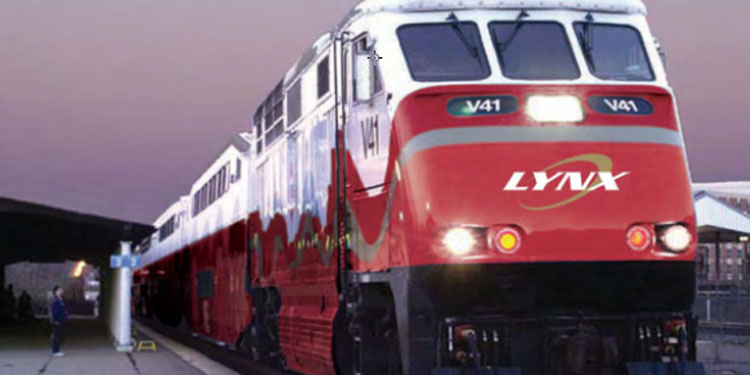
Oct. 17. By Dave Vieser. For months, officials from the North Mecklenburg towns of Cornelius, Davidson and Huntersville, as well as the city of Charlotte have been working hard to rekindle the idea of a commuter line, known as the Red Line, that would operate from the Queen City to the northern suburbs.
Over the past few weeks, the city has purchased the line’s right of way from Norfolk Southern for $74 million, while elected officials in Charlotte as well as the three northern towns adopted resolutions urging the state to approve a voter referendum next year to increase the countywide sales tax for transit and road costs.
While these measures have been moving forward, local residents and officials have been asking just how much building the Red Line would actually cost.
The figure of approximately $640 million has been frequently mentioned as the most recent estimate provided by the Charlotte Area Transit System (CATS).
It turns out that this estimate is 15 years old.
“That estimate was from previous design work done in 2009,” said Brian Nadolny, Red Line project manager. “Formulating an updated cost is one of the final tasks of the Red Line design update. At the conclusion of that design update in early 2025, we will have an updated cost estimate.”
It would be safe to assume that the new updated construction cost will be many times higher than the widely publicized $684 million figure.
Kurt Naas, a former Cornelius Commissioner and founder of Widen I-77, a grassroots effort that opposed private toll lanes on I-77, said the 23-mile project could easily cost upwards of $2 billion. (See Letter here)

Naas
Meanwhile, Charlotte city officials said that the purchase would be beneficial in future years.
Background
Charlotte City Council voted 10-1 to approve the purchase of the O-Line railroad right-of-way, track improvements, and property rights for $74 million, according to Charlotte Mayor Vi Lyles. The city council also approved the purchase of approximately 1.6 acres of property and any associated property rights located near the Charlotte Gateway Station for $17 million, for a total of $91 million.
“Council’s vote marks a historic milestone as we secure the O-Line for future commuter rail. I greatly appreciate all of our elected leaders who have worked to make this finally come to fruition,” Lyles said.
What’s next
Next up would be legislation to put a penny sales tax on the ballot next November. Problematic, however, is opposition from some members of the business community as well as Matthews Mayor John Higdon who said it was insulting to ask his residents to pay a sales tax that funds a station in another county.
A benefit
Half of the total revenue generated by the proposed sale tax would fund local road projects. With an estimated $200 million generated in north Mecklenburg over the first 10 years, there would be more funding for road projects, including pedestrian and cyclist safety improvements.
Quotable
“This funding would alleviate pressure on the Towns’ tax rates, enabling us to focus attention on other priorities, such as public safety initiatives, and parks and recreation spaces,” the mayors of all three North Meck towns said in a joint letter to residents in September.
4 Comments
Comments are closed.
Our Partners









Fix the roads and rails to trails.
Mr Matthews and Mr Naas have a point, but fail to consider the long term.
Their argument is fine if only considering the present state.
This page is full of nasty comments wondering why no proactive work on transportation exists. The train is a plan to address an issue in advance when most of us over 40 will be long dead.
Highways and rail complement each other. There is no single magic bullet. As with much of todays political discussion, absolutists make a lot of noise but offer little in pragmatic dialogue.
Modest sacrifice today will greatly benefit future generations
I would think the calculation of cost for the Red Line should have come before Charlotte and the local municipalities began purchasing the rail line and associated properties.
Now that the estimate is over two Billion, how do we pay for it?
What happened to the half percent sales tax funds that were authorized years ago?
Securing the Norfolk Southern right of way is a very important first step. It provides a right of way and a 100 foot wide easement from the Charlotte Gateway Station through the increasingly crowded northern towns. The price tag of $74 million is incredibly low for this purchase that provides us options. Everyone should be thankful to local and city leadership for making this happen.
Now that we have a Red Line pathway, we need to discuss the method of transit. Surface level transit is limited to surface level traffic, accidents, weather and jay walking pedestrians. Furthermore, the frequency of surface level transit is limited to the width of the existing rail line which is just a single track for most of the line.
There is a subsurface option that would allow for the use of the entire 100 foot easement width. This subsurface option or dedicated underground tunnels is being built in Las Vegas right now for about $20 million per mile. If you consider 3 tunnels, one each direction and one for service, the cost would be roughly $60 million per mile. A new Robobus, or autonomous electrical shuttle was announced on October 10th that would provide automated transit for up to 20 people at a time at an estimated operational cost of less than half that of traditional bussing. Perhaps most importantly, the speed at which this system could operate would allow one to get from Davidson to Uptown Charlotte in 20 minutes or less…. faster than you can drive yourself.
We need to thank our leaders for securing the Norfolk Southern easement but then ask them to support a transit solution that is faster than driving, less expensive to operate than busing and less expensive to build than light rail or commuter rail. I think using the full width of the Norfolk Southern easement to build dedicated subsurface tunnels with autonomous electric shuttles could be the solution.